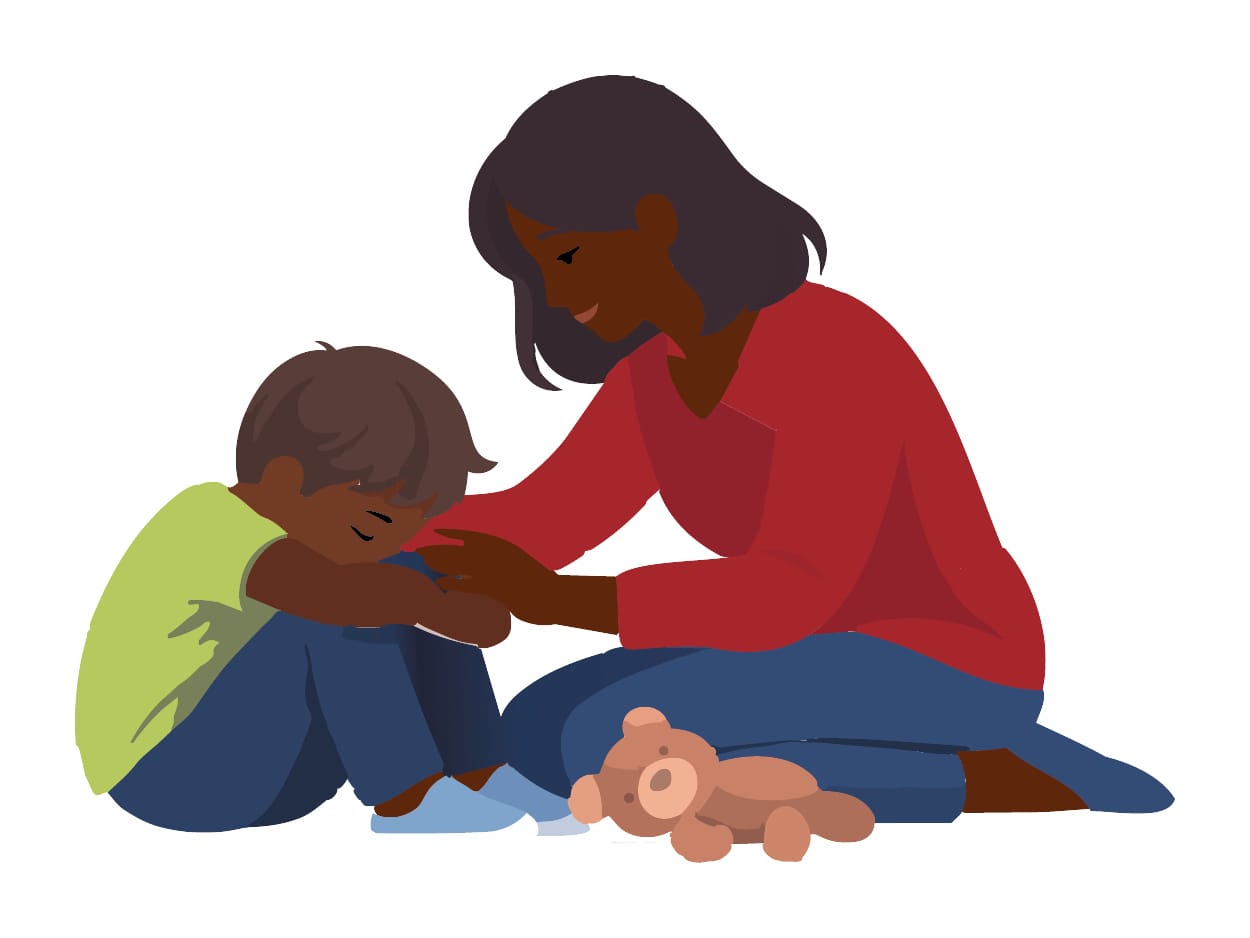
Keeping a strong connection can be helpful after a road crash.
Every child may respond differently.
Some may get upset and some may not; that’s ok.
- Let them know it’s okay to talk about how they feel.
- It’s okay to show your feelings as it helps them to express their own.
- Yarn about upcoming changes so they know what to expect.
- Let important people in the child’s life know, such as teachers and sports coaches.
- Try keeping a normal routine as much as possible.
- Encourage play and connection with friends and family.
- Guide the child through cultural stages of grieving.
When to seek help
- If a child is not coping with day to day activities.
- Ongoing physical symptoms; such as trouble sleeping, or changes in how they eat.
- Showing signs of wanting to hurt themselves or others.
- Ongoing signs of being sad, withdrawn, low energy, or crying often
Taking a child on country
- Help the child connect spiritually in a positive way.
- Practice story telling on country.
- Try connecting with people that care about the child.
- Support the child to be grounded on country.
- Help the child engage in cultural and spiritual practices like ceremonies, dancing, songs, and family.