
Commonly, experiencing trauma can affect your physical and mental health. Whether you are recovering after a road crash or supporting someone who is impacted, it is helpful to prioritise self-care strategies to support your overall well-being. Routine can be one of the first things to go out the window when you’ve experienced a potentially traumatic event, so try to regain some sense of control by incorporating activities that support your health and well-being and help promote healing.
Stay connected
Sometimes it can be challenging to want to connect with others when you’ve gone through a difficult event. There is a lot of research that highlights how social support is related to better physical and mental health outcomes, with some studies suggesting that the resilience of an individual is very dependent on the supportive social systems they have. Try reaching out to someone you trust during this time, who can provide positive practical and emotional support. Ways to stay connected include:
- Make time to connect with people whom you can trust, either in person, on the phone or online
- Join a community or support group.
- Invest in activities that nurture your relationships (e.g. engaging in hobbies or exercise together or catching up one-on-one without distractions or electronic devices)
- Spend time with pets or furry friends.
Physical health
Taking care of your physical health is vital in recovery from a traumatic event. Research indicates that physical activity plays a positive role in promoting physical and mental health, mental resilience, well-being, and quality of life after traumatic events.
After experiencing trauma, it is also beneficial to fuel your body through regularly eating healthy food. Making small tweaks and changes to improve our nutrition can have significant impacts on our bodies, particularly when it is recovering from trauma. Ways to look after your physical health include:
- Get involved in exercise or an activity that you are interested in.
- Make it social – exercise with a friend or family member.
- Start small and build up – even a short brisk walk can influence your mood.
- Incorporate more vegetables into your day and reduce your sugar intake.
**Check with a professional (Dietician or GP) before making large nutritional changes to your diet.
Emotional wellbeing
Taking time to look after your emotional well-being forms a holistic approach to healing after trauma. Checking in with yourself and acknowledging all the feelings you are experiencing allows you to sit better with bigger emotions better over time. Identifying an intense emotion, and then labelling, or naming what you believe it is, can reduce stress and anxiety in the brain and the body.
Other ways to look after emotional wellbeing:
- Practicing mindfulness or mediation
- Use relaxation techniques – Breathing, grounding, distraction.
- Embrace and use humour. Humour can help to down regulate the nervous system and boost wellbeing.
- Engage in hobbies or activities that calm or relax you e.g. reading, playing music, cooking, being in nature, painting etc.
Sleep
After road trauma, you may find it difficult to fall asleep, wake up frequently during the night, wake earlier than usual, or experience distressing dreams or nightmares.
You may also noticed unwanted images of the crash or feel increased anxiety, guilt or physical pain. These experiences can all interfere with your usual sleep patterns.
Sleep Hygiene
Sleep hygiene means building healthy habits and creating an environment that helps you sleep well.
Practicing good sleep habits can improve your sleep over time and may help prevent longer-term sleep problems.
The Government of Western Australia’s Centre for Clinical Intervention has developed a fact sheet that includes practical and helpful tips for better sleep.
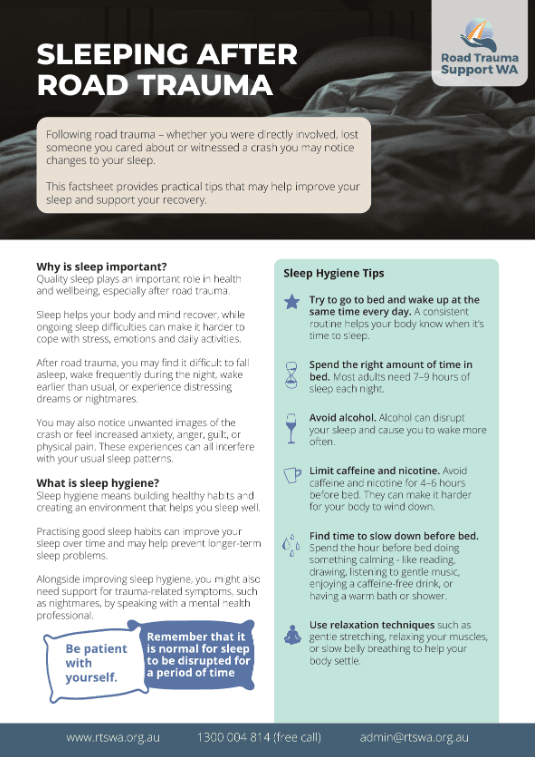
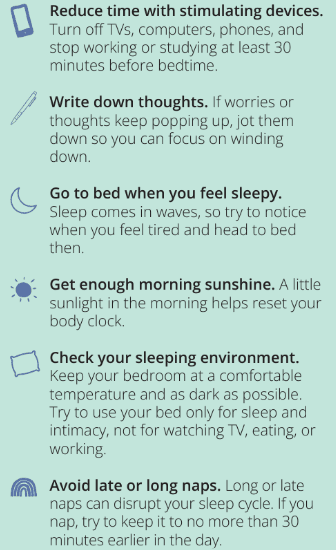
By making changes throughout the day and into the evening, we can reprogram our bodies, and improve the quality and quantity of our sleep.
Sleep Hygiene tips

Nightmares
Nightmares can occur after experiencing or witnessing road trauma. They may begin immediately after the event or develop weeks later. Waking from a nightmare can feel frightening and upsetting.
Nightmares and other trauma-related memories can be part of the way the brain processes a distressing experience. For many people, nightmares gradually become less frequent and less intense over time.
If nightmares continue, worsen, or are still significantly affecting your sleep several weeks after the incident, consider speaking with your General Practitioner (GP) or a mental health professional.
Where can I get help?
Most people deal with traumatic experiences with support from family and friends. However, sometimes reactions can feel overwhelming or last longer tan expected.
If you are worried or concerned about how you are coping, speak with your General Practitioner (GP). They can offer guidance and connect you with services in your area, such as a counsellor or psychologist.

Online Sleep Support
The Sleep Health Foundation is public-facing and is the leading advocate for sleep health in the Australian community. It aims to raise community awareness about the value of sleep, how to improve it and address common sleep disorders. For more sleep information access their website at https://www.sleephealthfoundation.org.au/

