
Eating a variety of healthy foods with key nutrients every day is important for healthy ageing. It helps support energy levels, muscle and bone strength, and reduces the risk of falls.
One nutrient that is especially important for older adults is protein. Protein helps keep muscles strong, supports mobility, balance, and independence. It is recommended that older adults eat 1-1.2 grams of protein per kilogram body weight each day. Good sources of protein include:
- dairy
- lean meat
- eggs
- lentils
- beans
- nuts and seeds, like almonds.
These foods also provide other important nutrients, such as calcium, iron, and fibre. Foods with high energy include healthy fats (butter, avocado, olive oil), complex carbohydrates (oats, brown rice, whole wheat products) and dairy products (milk, Greek yoghurt, cottage cheese).
Why reading food labels matters
Reading nutritional labels helps you make informed health choices and gives you confidence that you are getting enough key nutrients in your diet. While choosing mostly unprocessed foods is best, choosing packaged foods can sometimes be confusing. Food packaging often includes health claims on the front, such as ‘high protein’ or ‘natural’. These claims sound appealing but they don’t always tell the full story.
The most helpful information is found on the back of food packaging in the nutrition information panel and ingredients list. These sections make it clear what is really in the food and help you make healthier choices.
Helpful tips for reading food labels
Using the nutrition information panel and ingredient list helps you compare similar foods so you can choose the healthiest option.
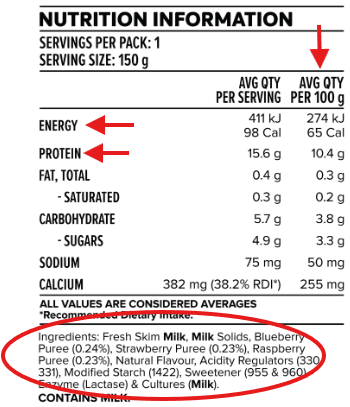
Compare the per 100g or 100ml column
The quantity per 100g or 100ml column is best when comparing different brands of similar products. It tells us about the nutrients in each 100g or 100ml of the product. The per-serving column can be misleading because serve sizes vary across brands.
Energy is listed on the panel as kilojoules (kJ). Fats, protein, and carbohydrates all provide your body with the energy or kilojoules you need to function and do your daily activities. When comparing similar foods, lower energy usually means lower fat or sugar, which means that the food is a better choice for most people.
Check the ingredient list
Ingredients are listed by weight from largest to smallest amount.
- Look for products where protein-rich ingredients are near the top of the list.
- Shorter ingredient lists usually mean less processing.
- Longer lists often include additives, fillers or extra salt, sugar and fat
Check the Health Star Rating
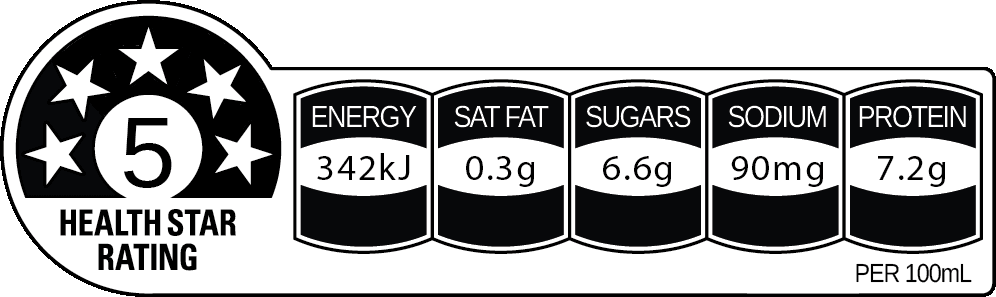
You’ve probably seen these on a range of foods, from cereals to yoghurts. The system rates the overall nutrition profile of packaged food and rates it from ½ a star to 5 stars, with the more stars representing the healthier option. The Health Star Rating is calculated using:
- positive nutrients – dietary fibre, protein and fruit, vegetable, nut and legume content.
- energy (kilojoules)
- nutrients to limit – saturated fat, sodium (salt) and sugars.
Understanding protein claims
Some packages highlight protein content on the front of the label. This is what they usually mean:
- Excellent source of protein = more than 20g protein per 100g
- Good source of protein = 10-20g protein per 100g
Be careful when choosing protein-packed snacks like protein bars. Although convenient, they can be high in sugar and fat. Always check the nutrition information panel.
Many healthy foods, such as fruit and vegetables, don’t have a nutritional information panel, ingredients list, or Health Star Rating. These are still an important part of a balanced diet, and you should aim for 2 servings of fruit and 5-6 servings of vegetables every day.
Learn more
Download or order the free Stay On Your Feet® Fuel Your Body booklet for more tips on nutrition and healthy ageing.
You can also visit an accredited practising dietitian or nutritionist, or speak to your local GP or health professional for healthy eating advice and support.
Eating a variety of nutritious food helps us to stay healthy and strong. Knowing what you are eating through reading food labels and choosing less processed foods can go a long way in preventing a fall.