
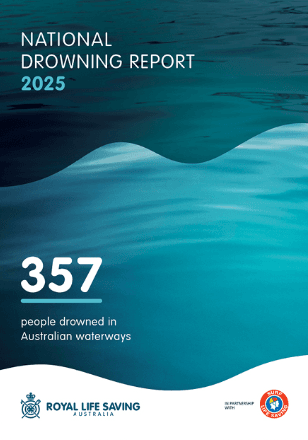
The latest National Drowning Report released by Royal Life Saving Australia examines 2024/2025 drowning deaths and compares it to the 10-year average.
Report Summary
Between 1 July 2024 and 30 June 2025, 357 people drowned in Australia—a 27% increase compared to the ten-year average.
It was reported that in Western Australia for the same period:
- 49 drowning deaths occurred, a 36% increase on the 10-year average.
- 84% of drowning deaths were male
- The highest number of drowning deaths occurred in the 75+ year age group (20%)
- Drowning deaths among 0 – 4-year-olds accounted for 2% of total drowning deaths, a decrease of 49% on the 10-year average.
- People living in disadvantaged areas accounted for 56% of the total drowning deaths in WA
- Drowning mostly occurred at beaches (31%)
The increase in drowning deaths is being driven by three main factors
1: Exposure to water is evolving
Australians are spending more time around water in remote and less traditional locations due to lifestyle and climate changes. This shift increases drowning risks, especially in vulnerable communities.
2. Swimming skills are in rapid decline
Swimming skills have declined since the 1970s due to reduced access to school and private lessons and parents withdrawing children before they develop essential lifesaving skills. Reversing this decline requires long-term commitment to ensure all children and adolescents, regardless of background, have fair and consistent access to swimming education.
3. One in 3 drowning deaths is a person over the age of 65
Older Australians now make up over a third of drowning deaths in Australia. As more older adults enjoy water activities, age-related health issues such as reduced strength and mobility and underestimated risks increase their vulnerability. Targeted water safety education is essential.
These findings reinforce the need for strengthened swimming and water safety education, localised safety efforts, and coordinated policies and partnerships to reduce drowning across all communities.
Want to learn more?
To learn more about the role you can play in drowning prevention, access the Know Injury Drowning Prevention Tooklit.
Learn more about reducing the risk of drowning in adults aged 65 years and over.
Learn about how to keep the community safe in and around water in WA.