
Sometimes it can feel like life is too hard and difficulties can seem overpowering. No matter what your concerns are it is important to let someone know so they can support you. To speak to a trained mental health professional for immediate support contact:
- Lifeline WA on 13 11 14 or www.lifelinewa.org.au
- Beyond Blue on 1300 224 636 or www.beyondblue.org.au
- Suicide Call Back Service on 1300 659 467 or www.suicidecallbackservice.org.au
If you, or someone else, is at immediate risk of harm do not hesitate to contact emergency services on 000.
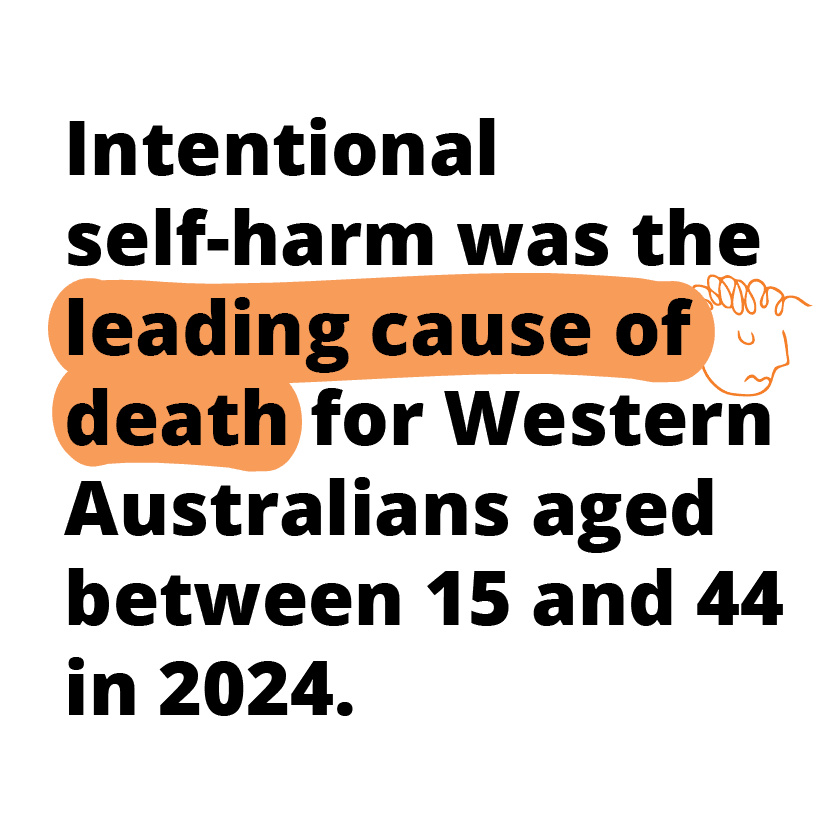
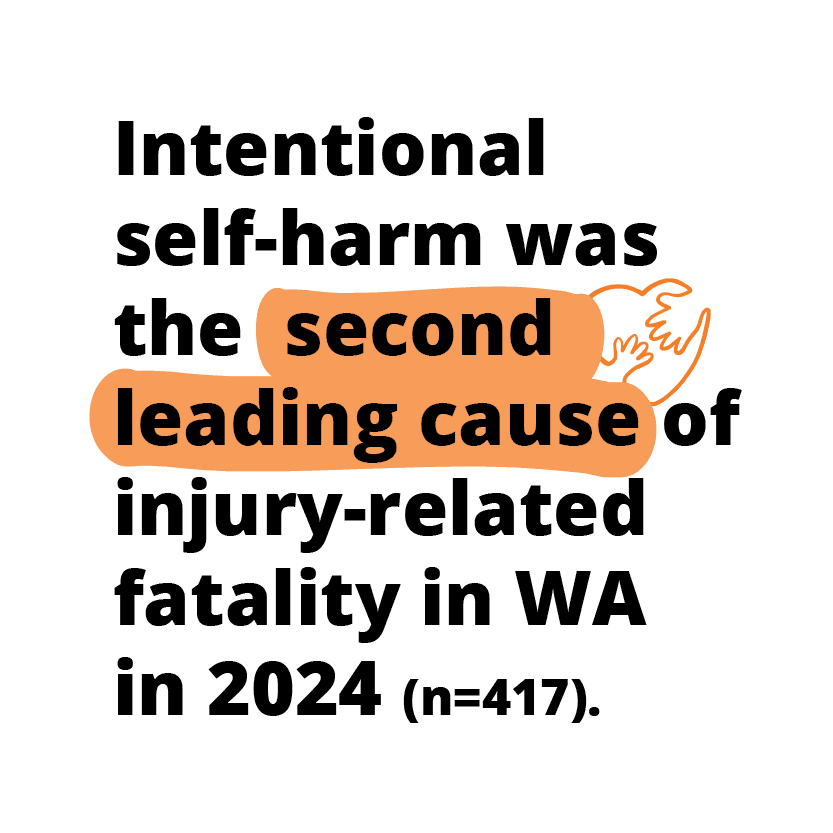
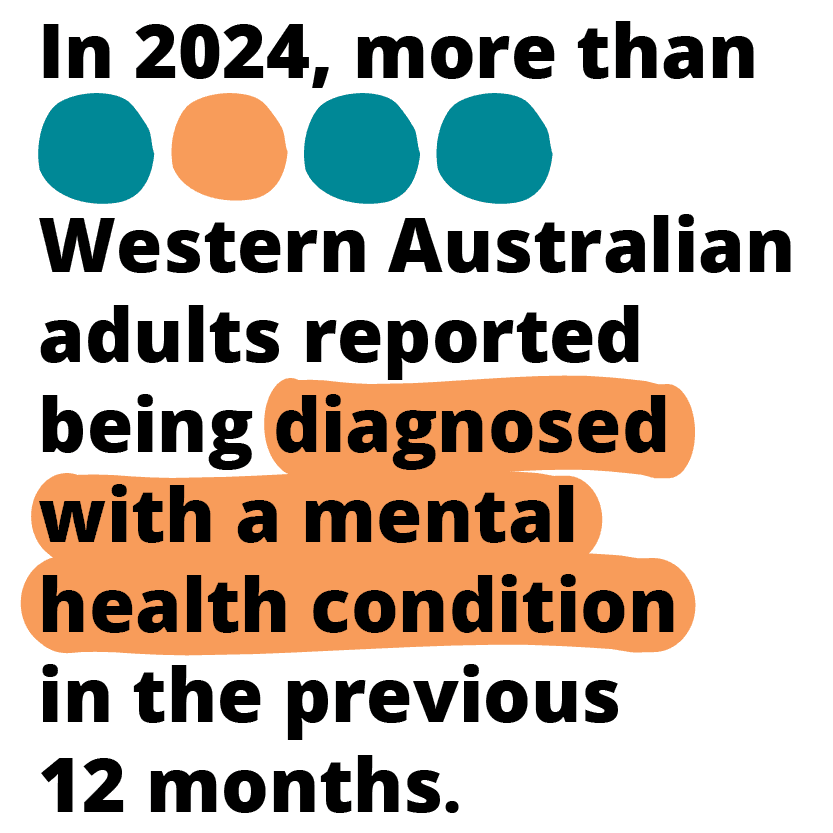
While data included on this page assists in highlighting the incidence of intentional self-harm in WA, Injury Matters recognises that behind every number are stories of Western Australians and the broader community who have been impacted by intentional self-harm.
How can we reduce intentional self-harm?
Just like physical health, mental health is vital to human health and wellbeing. Mental health includes social, emotional and psychological wellbeing, not just the absence of illness.
Given that poor mental health is the main causal factor for intentional self-harm, keeping mentally healthy is key to preventing intentional self-harm.
As outlined by Mentally Healthy WA, there are three core components to becoming more mentally healthy; act, belong and commit.
- Act – doing something to keep active in as many ways as you can, physically, mentally, socially and spiritually.
- Belong – doing something with someone to keep connected to friends and family.
- Commit – doing something meaningful.
Despite some factors placing individuals at higher risk of intentional self-harm, including; a traumatic life event, an existing mental health issue or physical illness, it is important that all Western Australians dedicate time to staying mentally healthy.
If you think someone might be at-risk of intentional self-harm, don’t be afraid to ask them directly as this shows them that you care. If the person says that they are considering intentional self-harm or have self-harmed, allow them to express how they are feeling and reinforce that you are there for them. If you think they would benefit from talking to someone else about how they are feeling, encourage them to get in contact with their GP or reach out to a crisis line such as;
- Lifeline on 13 11 14,
- Beyond Blue on 1300 224 636, or
- Suicide Call Back Service on 1300 659 467.
What support is available to those affected by intentional self harm?
Physical and psychological recovery from an incidence of intentional self-harm can take time and is different for everyone.
Psychological and/or medical treatment may be needed to support the individual in addressing any underlying factors contributing to their poor mental health, so it is important that the individual discusses healthcare options with their GP.
Intentional self-harm is one of the main predictors for suicide. Even if the individual does not express any intention of dying, an assessment by their GP or other health professional is recommended.
Lifelong positive mental health behaviours are important in helping to keep all Western Australians mentally healthy.
Organisations and programs
RUOK
R U OK? is a national suicide prevention charity and registered public health promotion that encourages people to stay connected...
360 Health + Community
360 Health and Community offers tailored mental health support across WA, including counselling, the ALIVE Suicide Prevention program and the...
LGBTQIA+ Health Alliance – MindOut: Mental Health & Suicide Prevention
MindOut develops and delivers national suicide prevention initiatives for the mental health and suicide prevention sectors to help them meet...
Support After Suicide
Support After Suicide provides information, resources, counselling and group support to those bereaved by suicide. They also provide education and...
WA Connect
WAConnect is a directory of community service providers managed by the DropIN team at the Western Australian Council of Social...
DAYDAWN- Advocacy Centre
Daydawn was established in 2007 by Archbishop Barry Hickey. We advocate for Aboriginal people across Western Australia. We have a...
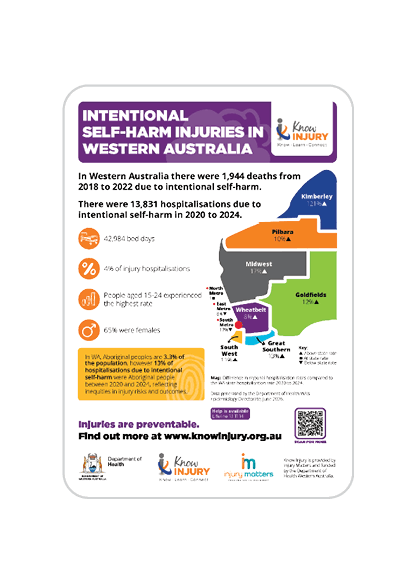
Injury Matters Intentional Self-Harm Resources

External Resources
- Act Belong Commit – Resources
- Beyond Blue – Resources
- Everymind – Resources
- HealthInfoNet – Resources
- Life in Mind – Resources
- Online directory of local mental health services
- Think Mental Health – Resources
- WA Mental Health, Alcohol and Other Drugs Strategy 2026-2031
References
- Australian Bureau of Statistics. 3303.0 Causes of Death, Western Australia, 2024. (2025).
- Epidemiology Directorate, Department of Health Western Australia. Health and Wellbeing of Adults in Western Australia 2024. (2025).